Beer Serving Temperature: How Cold Each Style Should Be
How Cold Each Style Should Be
Most beer tastes best somewhere between 38 and 55°F (about 3 to 13°C), not at the near-freezing temperature of a typical home fridge. The short rule: light, crisp lagers go coldest, while darker, stronger and more aromatic beers are served a few degrees warmer so their flavor can actually reach you.
Quick facts
- Overall range: roughly 38 to 55°F (3 to 13°C) for nearly every style.
- Coldest: mainstream light lagers, 33 to 40°F (1 to 4°C).
- Middle: pale ales and IPAs, 45 to 50°F (7 to 10°C).
- Warmest: strong lagers, cask ales and Belgian dubbels, 50 to 55°F (10 to 13°C).
- A typical refrigerator runs around 35 to 38°F, which is ideal only for the lightest lagers.
Why temperature changes how beer tastes
Cold numbs the tongue and keeps aromatic compounds locked in the liquid. That is helpful for a light lager, where the goal is crisp and clean refreshment, and a nuisance for a stout, where the whole point is roast, chocolate and dark fruit. As beer warms, more of its aroma escapes into the glass and your perception of sweetness and body increases.
Carbonation also behaves differently. Colder beer holds its CO2 better, so it feels sharper and fizzier. Warmer beer releases gas faster, which feels softer and rounder. Neither is wrong; each suits different styles.
There is a flip side. Serve a delicate pilsner too warm and small flaws become obvious while the snap disappears. Serve a strong dark beer too cold and it tastes thin, sweet and oddly muted, then improves over the next twenty minutes as it warms up in the glass.
Serving temperature by style
These ranges follow the widely used guide from Randy Mosher's Tasting Beer, as published by the American Homebrewers Association.
| Style | °F | °C (approx.) |
|---|---|---|
| Mainstream light lagers | 33 to 40 | 1 to 4 |
| Pale lagers, pilsners | 38 to 45 | 3 to 7 |
| Cream and blonde ales (and kolsch) | 40 to 45 | 4 to 7 |
| Nitro stouts | 40 to 45 | 4 to 7 |
| Belgian pale ales, tripels | 40 to 45 | 4 to 7 |
| Wheat beers | 40 to 50 | 4 to 10 |
| Lambics | 40 to 50 | 4 to 10 |
| Dark lagers | 45 to 50 | 7 to 10 |
| American pale ales and IPAs | 45 to 50 | 7 to 10 |
| Stouts and porters | 45 to 55 | 7 to 13 |
| Strong lagers | 50 to 55 | 10 to 13 |
| Cask ales | 50 to 55 | 10 to 13 |
| Belgian dubbels | 50 to 55 | 10 to 13 |
For a deeper look at the styles themselves, see beer styles explained, light lager, American IPA and porter vs stout.
Three rules that cover almost everything
- Lagers colder than ales. Lagers are built around clean, crisp character. Ales carry fruity yeast notes that need a little warmth to show up. (More in ale vs lager yeast.)
- Darker warmer than lighter. Roasted malt flavors open up with a few extra degrees.
- Stronger warmer than weaker. Higher-alcohol beers tend to be richer and more layered, and those layers need room. Check the label for ABV as a quick guide.
How to hit the right temperature at home
You do not need a thermometer. A few habits get you close:
- Pull it early. For IPAs and pale ales, take the can out of the fridge 5 to 10 minutes before pouring. For stouts, porters and Belgian dubbels, give it 15 to 20 minutes.
- Aim a little low. The glass and your hand both warm the beer, so it is fine to pour slightly colder than the target and let it drift up.
- Skip the frosted mug. A frozen glass knocks the beer well below its ideal range and can leave ice crystals and freezer smells behind. A clean, room-temperature or lightly chilled glass is better. See beer glassware for why shape matters too.
- Use a stemmed glass for warmer styles. Holding the stem keeps your palm off the bowl, so the beer warms more slowly.
- Separate storage from serving. Store beer cold (see how to store beer), then let it come up to serving temperature. Cold storage slows staling; serving temperature is about flavor.
What about "ice cold"?
Ice cold is a perfectly good temperature for a mainstream light lager on a hot afternoon, and that is roughly what those beers are designed for. The trouble starts when every beer gets the same treatment. If a hoppy or dark beer tastes flat or bland straight from the fridge, the beer is usually fine. Give it ten minutes and taste again.
From the Lonerider lineup
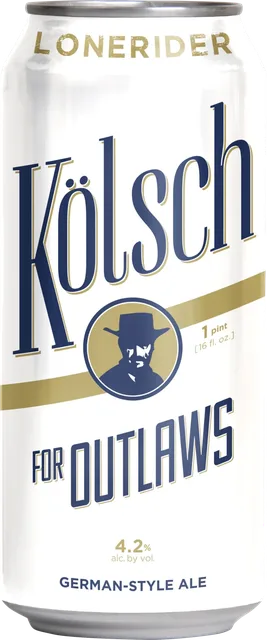
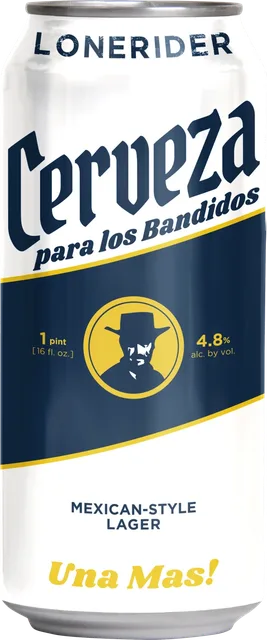
Two lighter beers in the lineup belong at the cold end of the chart: Kolsch for Outlaws (4.2% ABV) is happiest around 40 to 45°F, and Cerveza para los Bandidos, a 4.8% Mexican-style lager, works best in the pale lager range of 38 to 45°F.
FAQ
What temperature should beer be served at?
Most beer should be served between 38 and 55°F (3 to 13°C). Light lagers sit at the cold end, IPAs in the middle around 45 to 50°F, and strong or dark beers such as Belgian dubbels and stouts at the warmer end, up to 55°F.
Should IPA be served cold?
Cool, not ice cold. About 45 to 50°F lets the hop aroma come through. Straight from a 36°F fridge, an IPA's citrus and pine notes are muted, so let it sit for 5 to 10 minutes before drinking.
Is it bad to drink stout cold?
It is not harmful, just less flavorful. A stout served too cold tastes thin and hides its roast and chocolate character. Around 45 to 55°F is the sweet spot, while nitro stouts are typically served a bit cooler, around 40 to 45°F.
Does letting beer warm up and then chilling it again ruin it?
Not in the way people fear. A single trip from cold to warm and back will not skunk or spoil beer. What does hurt beer is long periods of warm storage, which speeds up staling, so keep it cold whenever you can.
What is the best fridge temperature for beer?
Around 38°F is a good compromise for storage. It keeps beer fresh and serves light lagers well, and you can let other styles warm up a little on the counter before pouring.