ABV and IBU Explained: What the Numbers on Your Beer Mean
What the Numbers on Your Beer Mean
ABV, or alcohol by volume, is the percentage of a beer's total volume that is ethanol, so a 5% ABV beer is 5 percent alcohol. IBU, or International Bitterness Units, is a lab measure of bitter hop compounds dissolved in the beer, and it is a useful hint about bitterness rather than a reliable prediction of how bitter a beer will taste.
Both numbers show up on cans, menus and beer apps. One is quite precise and legally regulated. The other is helpful but routinely misunderstood.
Quick facts
- ABV = percent of the beer's volume that is alcohol.
- Most beers fall somewhere around 4 to 7% ABV.
- US label tolerance: stated ABV can be off by up to 0.3 percentage points either way.
- Brewer's shortcut: ABV ≈ (original gravity minus final gravity) × 131.25.
- IBU is measured by UV absorbance at 275 nm, multiplied by 50.
- IBU roughly tracks parts per million of iso-alpha acids, but not exactly.
What ABV means
Alcohol by volume answers a simple question: of everything in the container, how much is alcohol? In a 16 oz can of 5% ABV beer, 0.8 fluid ounces is ethanol.
You may also see ABW (alcohol by weight) in older references. Because alcohol is lighter than water, ABW reads lower than ABV for the same beer; a 5% ABV beer is roughly 4% ABW. Today, ABV is the standard in the US.
How ABV is measured
Brewers usually estimate ABV from sugar density. Before fermentation, they measure the wort's specific gravity, called original gravity (OG). Sugar makes liquid denser than water, so a sweet wort might read 1.050. After fermentation, much of that sugar has become alcohol, which is less dense, so the final gravity (FG) drops, maybe to 1.010.
The common shortcut is:
ABV ≈ (OG minus FG) × 131.25
For 1.050 to 1.010, that gives about 5.25%. A more detailed formula gives a slightly higher figure for the same readings, and the gap grows in strong beers, which is one reason breweries with lab budgets measure alcohol directly with dedicated instruments rather than relying on the gravity math alone.
ABV on US labels
Under federal rules for malt beverages, an alcohol statement is optional under the federal labeling rule (unless state law says otherwise), but if a brewer states ABV, it must be expressed as a percentage by volume. For beers at 0.5% ABV or above, the actual alcohol content may be up to 0.3 percentage points above or below the label. A beer labeled 5.0% could legally test anywhere from 4.7% to 5.3%. For more on reading a can, see how to read a beer label.
What IBU means
IBU stands for International Bitterness Units. It is a lab measurement of bitter compounds, mainly iso-alpha acids, the bitter acids created when hops are boiled. The common shorthand is that one IBU equals about one part per million (one milligram per liter) of iso-alpha acids, but that is only an approximation.
The standard method, used by brewing labs following the American Society of Brewing Chemists approach, acidifies a beer sample, extracts the bitter compounds into a solvent, measures how much ultraviolet light they absorb at 275 nanometers, and multiplies the reading by 50. The method assumes most of what it detects is iso-alpha acid. In reality it also picks up other hop compounds, polyphenols and oils. It was originally designed for relatively low-bitterness beers that were not dry hopped.
Many small breweries do not send every batch to a lab. They calculate an estimated IBU from hop quantity, alpha acid percentage and boil time, which can drift from a lab result. See hops explained for how boil timing creates bitterness.
Why IBU and perceived bitterness don't match
Two beers with the same IBU can taste very different. Some of the reasons:
- Malt and sweetness. Residual sugar and body soften bitterness. A rich, malty beer at 40 IBU can taste milder than a lean, dry beer at 30.
- Roasted and caramel malts add their own bitter or burnt notes that the IBU test does not attribute to hops.
- Water minerals. Sulfate makes bitterness feel crisper and sharper. See water and beer.
- pH and carbonation. Higher pH tends to make bitterness more noticeable; carbonation shapes how it lands on the palate.
- Dry hopping. Heavily dry-hopped beers can contain humulinones and polyphenols that add bitterness without the boil, and dry hopping can even lower the iso-alpha acid reading. So a hazy IPA's IBU number can understate or misstate what you taste. See dry hopping.
- Age. Bitterness generally fades as beer ages and oxidizes.
- Your own biology. Sensitivity to bitter compounds varies with genetics, age and diet.
A famous example: Pilsner Urquell measures around 39 IBU, similar to some American pale ales, yet most people perceive it as less bitter. The number is real; the perception is shaped by everything around it.
How to use the numbers
Treat ABV as a reliable fact for pacing. Treat IBU as a rough category marker: low (under about 20), moderate (20 to 40), firm (40 to 60), high (above 60). Then let your palate overrule it. For more on tasting, see how to taste beer.
From the Lonerider lineup
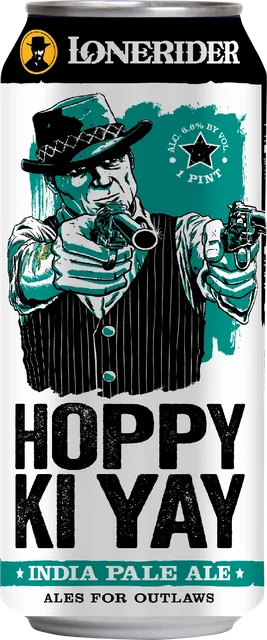
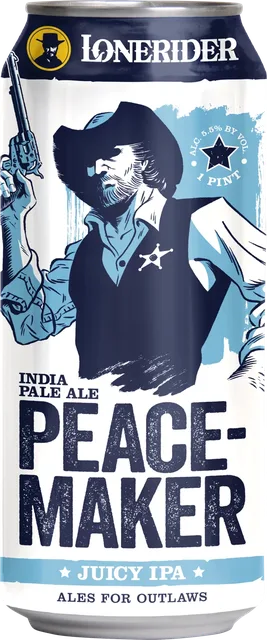
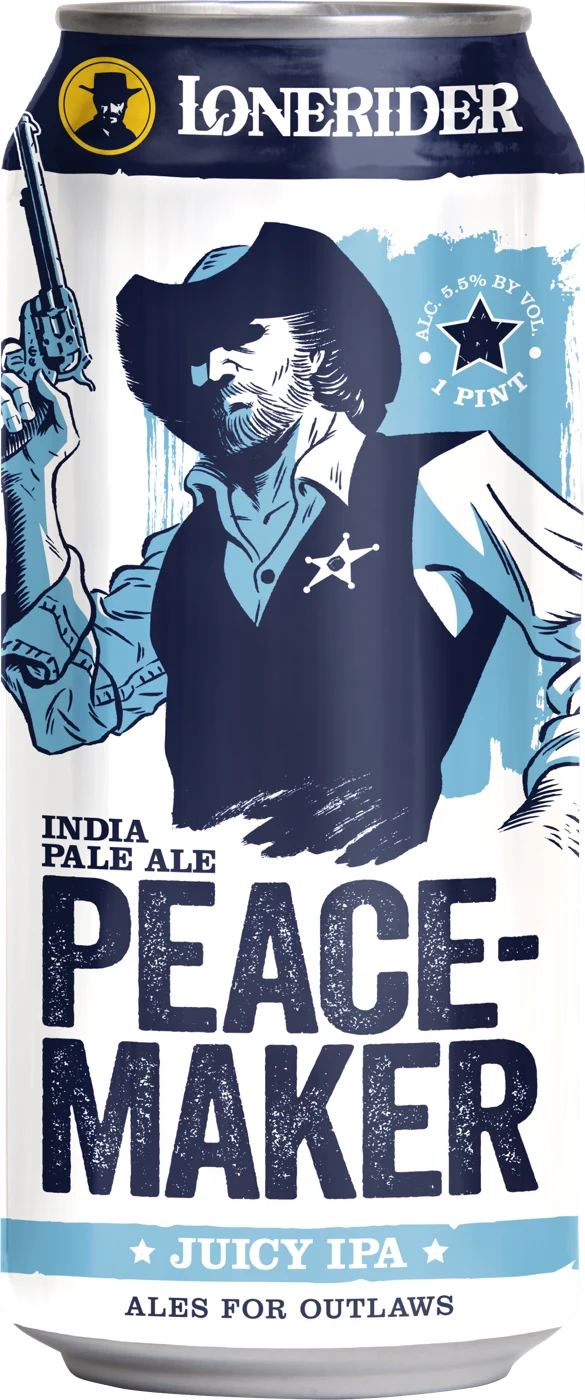
Hoppy Ki Yay lists 6.6% ABV and 61 IBU, a classic American IPA where bitterness is part of the design. Peacemaker, a juicy IPA at 5.5% ABV, is built for big citrus aroma with low bitterness, a good reminder that "IPA" and "very bitter" are not the same thing.
FAQ
What does ABV mean on beer?
ABV stands for alcohol by volume. It tells you what percentage of the beer's total volume is alcohol, so a 6% ABV beer is 6 percent ethanol.
What is a high IBU?
Beers above about 60 IBU are generally considered highly bitter. The BJCP guidelines put American IPA at 40 to 70 IBU. Perceived bitterness also depends on malt, water and hop technique, so the number is a guide, not a guarantee.
Is a higher IBU beer stronger?
No. IBU measures bitterness, not alcohol. A beer can have high IBU and modest ABV, or low IBU and high ABV.
How accurate is the ABV on a beer label?
In the US, federal rules allow the actual alcohol content of beer to vary by up to 0.3 percentage points above or below the stated ABV, for beers at 0.5% ABV or higher.
Why doesn't my hazy IPA taste bitter even though it is an IPA?
Hazy IPAs usually add most hops late in the boil or during fermentation, which builds aroma rather than boiled bitterness. They also tend to have softer water and fuller body, which mutes bitterness further.