Beer Yeast: Ale vs Lager and Why It Matters
Ale vs Lager and Why It Matters
The difference between an ale and a lager is the yeast. Ales are fermented with Saccharomyces cerevisiae at warmer temperatures, which tends to produce fruity and spicy flavors; lagers are fermented with Saccharomyces pastorianus at cooler temperatures and then cold-aged, which tends to produce a cleaner, crisper beer.
Color, strength and bitterness have nothing to do with it. There are pale ales and black lagers, light ales and strong lagers. Every beer style sits on one side of the yeast line or, in a few interesting cases, straddles it.
Quick facts
- Ale yeast: Saccharomyces cerevisiae, often called top-fermenting.
- Lager yeast: Saccharomyces pastorianus, often called bottom-fermenting, a natural hybrid.
- Ale fermentation: roughly 60 to 78°F; clean ales usually stay under about 68 to 70°F.
- Lager fermentation: roughly 48 to 58°F.
- Lagering: at least 2 to 3 weeks of cold aging near 32°F.
- Lager yeast's wild parent was identified in Patagonia in 2011.
What yeast actually does
Yeast is a single-celled fungus. In beer, it eats the sugars the brewer pulled out of malt and turns them into ethanol and carbon dioxide. Along the way it makes hundreds of other compounds in small amounts, and those are what give each yeast strain its personality.
Two families of those byproducts matter most to drinkers:
- Esters are fruity: banana, pear, apple, stone fruit, bubblegum.
- Phenols are spicy or smoky: clove, pepper.
Warmer fermentation generally means more of both. Cooler fermentation generally means fewer, and a beer where malt and hops do the talking. Yeast also decides how dry a beer finishes, since some strains eat more of the available sugar than others.
Ale yeast
Ale yeast, Saccharomyces cerevisiae, is the same species bakers use, though brewing strains have been selected for centuries for very different jobs. It was traditionally called "top-fermenting" because many strains rise and form a thick foam (krausen) at the top of the fermenter, which brewers once skimmed to reuse.
Ale yeast works in a range of about 60 to 78°F. Clean styles like American IPA are usually kept in the low to mid 60s so the hops stay in front. Push the temperature up, roughly above 70°F, and many strains start producing pronounced esters and phenols. In a lot of styles that is the point:
- German wheat beer gets banana and clove from its yeast, not from any added fruit or spice. See hefeweizen.
- Belgian ales get pear, spice and pepper from expressive strains. See Belgian tripel and dubbel.
- Saison gets its peppery dryness from yeast.
Ales are generally quicker to produce. Primary fermentation can wrap up in under a week, and many are ready to drink within two to three weeks of brewing.
Lager yeast
Lager yeast, Saccharomyces pastorianus, was long called "bottom-fermenting" because it tends to work lower in the fermenter and settle out. It handles cold well, fermenting at roughly 48 to 58°F. At those temperatures it produces few esters or phenols, which is why lagers taste clean and let malt and hops come through plainly.
Then comes the step that gives lagers their name. Lagern is German for "to store." After fermentation, lagers are held cold, close to 32°F, for at least two to three weeks and often longer. During lagering, yeast and proteins drop out, sulfur and other rough edges fade, and the beer turns smooth and crisp. Note that the cold storage is separate from fermentation; lagers do not ferment near freezing.
Styles in the lager family include pilsner, helles, Märzen, bock, Mexican lager and light lager.
Where lager yeast came from
For a long time, scientists knew lager yeast was a hybrid of ale yeast and some other cold-tolerant Saccharomyces species, but nobody could find that second parent in the wild. In 2011, a team led by José Paulo Sampaio reported in Proceedings of the National Academy of Sciences that it had isolated a new species, Saccharomyces eubayanus, from beech forests in Patagonia, Argentina. Its genome was about 99.5 percent identical to the non-ale portion of the lager yeast genome. How a South American wild yeast ended up in Bavarian cellars is still debated, and related strains have since turned up elsewhere.
Beers that blur the line
A few styles use one yeast family in the other's conditions:
- Kölsch and altbier use ale yeast fermented cool, then cold-conditioned like a lager. The result is a clean, delicate ale. See kolsch.
- California common uses lager yeast fermented warm, giving a fruitier character than a typical lager.
These hybrids are a good reminder that "ale" and "lager" describe a process as much as a microbe.
From the Lonerider lineup
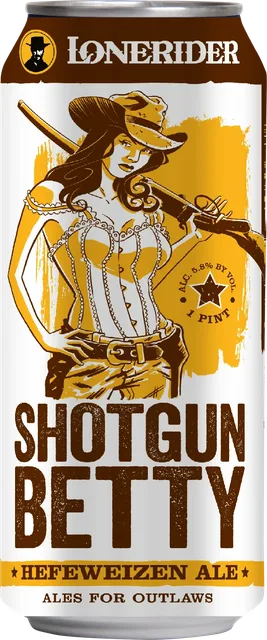
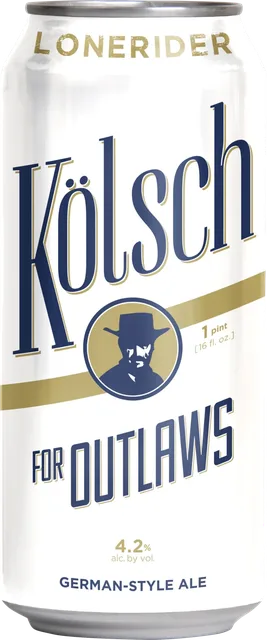
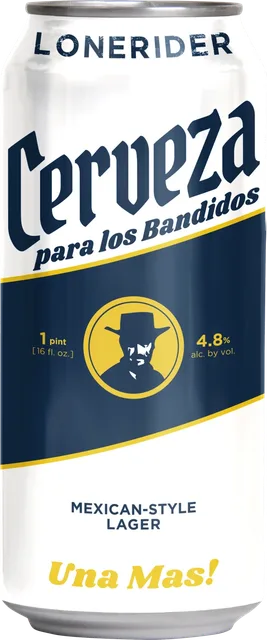
Three beers here show the yeast spectrum neatly. Shotgun Betty, a German-style hefeweizen at 5.8% ABV and 11 IBU, gets its banana and clove nose from ale yeast. Kolsch for Outlaws, a German-style kolsch at 4.2% ABV, sits in the hybrid middle. Cerveza para los Bandidos, a Mexican-style lager at 4.8% ABV, is on the clean lager side.
FAQ
What is the main difference between ale and lager?
The yeast. Ales use Saccharomyces cerevisiae fermented warm, which often adds fruity or spicy flavors. Lagers use Saccharomyces pastorianus fermented cool and then cold-aged, which gives a cleaner, crisper taste.
Is lager or ale stronger?
Neither by definition. Both families range from light, low-alcohol beers to very strong ones. Strength depends on how much fermentable sugar the brewer starts with, not on the yeast type.
Is IPA an ale or a lager?
IPA is an ale. A related style called India pale lager uses lager yeast with heavy hopping, but standard IPAs are fermented with ale yeast.
Is Kölsch an ale or a lager?
Kölsch is an ale. It uses ale yeast fermented at cool temperatures and then cold-conditioned, so it drinks with some of the crispness of a lager.
Why does hefeweizen taste like banana?
The yeast. Hefeweizen strains produce an ester called isoamyl acetate (banana) and a phenol called 4-vinyl guaiacol (clove). Warmer fermentation is widely believed to push the balance toward banana, cooler toward clove. No fruit or spice is added.