Kölsch: Cologne's Protected Beer Style Explained
Cologne's Protected Beer Style Explained
Kölsch is a pale, light-bodied beer from Cologne, Germany, fermented with ale yeast and then cold-conditioned like a lager. The result is a crisp, clean, delicate beer with a soft bready malt, a light hop bite and just a hint of fruit.
It is also one of the few beer styles with a legal home address. In the European Union, only beer brewed in and around Cologne (Köln in German) can be sold as Kölsch. Elsewhere, brewers usually label their versions "Kölsch-style."
Quick facts
- Family: hybrid (top-fermenting ale yeast, cold-conditioned like a lager)
- Origin: Cologne, Germany
- ABV: 4.4 to 5.2% (BJCP 2021); 4.8 to 5.3% (Brewers Association 2026)
- Bitterness: 18 to 30 IBU (BJCP); 22 to 30 IBU (BA)
- Color: 3.5 to 5 SRM (BJCP); 3 to 6 SRM (BA), pale straw to light gold
- Glass: the Stange, a tall, narrow cylinder holding 200 ml
- Protected: Kölsch Konvention (1986); EU protected geographical indication (1997)
What Kölsch tastes like
Subtle is the word. Kölsch has a soft, slightly sweet, grainy malt, a gentle herbal or floral hop note and a faint fruitiness from the ale yeast (some drinkers pick up pear or apple). It finishes dry and crisp, and drier versions can taste more bitter than their IBU number suggests.
Because there is so little to hide behind, flaws show. The BJCP warns that Kölsch's delicate flavor fades with age and that oxidation is a common problem. Buy it fresh.
The Cologne breweries themselves differ mostly in balance: one leans a bit maltier, another a bit more bitter. That variation is part of the style.
Ale or lager? Both, sort of
Kölsch is fermented with top-fermenting ale yeast at relatively cool ale temperatures, then held cold for a period of lagering. The ale yeast gives a trace of fruit; the cold conditioning gives the clean, smooth finish people associate with lager. That is why it gets called a hybrid. For the background on how the two yeast families differ, see beer yeast: ale vs lager.
Kölsch history and the Cologne appellation
Cologne has brewed top-fermented beer since the Middle Ages, and the city defended that tradition with unusual stubbornness. In 1603 the town council required brewers to swear an oath to brew with top-fermenting yeast and not bottom yeast, and in 1676 and 1698 it went further by forbidding the sale of bottom-fermented beer inside the city walls.
The modern beer took shape in the late 1800s, when pale lagers were spreading across Germany. Cologne's brewers, barred from bottom fermentation, answered with a pale, clear, top-fermented beer of their own. The name Kölsch was first used in 1918 for a beer the Sünner brewery had been making since 1906.
In 1986, 24 brewers from Cologne and the surrounding area signed the Kölsch Konvention. The agreement defines Kölsch as a light, highly attenuated, hop-accentuated, clear, top-fermenting Vollbier and restricts the name to breweries in the Cologne region. Two breweries outside the city that already made Kölsch were allowed to keep doing so. In 1997, Kölsch received protected geographical indication (PGI) status in the European Union. That protection applies inside the EU; it is not recognized everywhere else, which is why you will see Kölsch-style beers from American brewers.
The Stange, the Köbes and the Kranz
Kölsch is traditionally served in a Stange, a tall, thin, straight glass that holds 200 ml (about 6.8 ounces). The small size keeps every glass fresh and cold.
In Cologne's beer halls, the server is called a Köbes. He carries Stangen on a round tray called a Kranz and, by long custom, replaces an empty glass with a full one without being asked. More on why glass shape matters in beer glassware.
Kölsch vs other pale beers
- vs pilsner: pilsner is a true lager, usually crisper and more bitter, with no ale fruitiness.
- vs blonde ale: American blonde ale is similar in color and strength but is not lagered, so it tends to be rounder and less crisp.
- vs light lager: Kölsch has noticeably more malt flavor and hop character than an American light lager. See light lager.
- vs altbier: Düsseldorf's altbier is also a top-fermented, cold-conditioned beer, but it is amber to copper and more bitter.
How to serve and pair it
Serve Kölsch cold, around 40 to 45°F, in a Stange or another narrow glass. See beer serving temperature. It pairs with light food: salads, grilled fish, shellfish, chicken, pretzels, mild cheeses and German sausages. It is a good beer for when the food is the point and the beer should stay out of the way.
From the Lonerider lineup
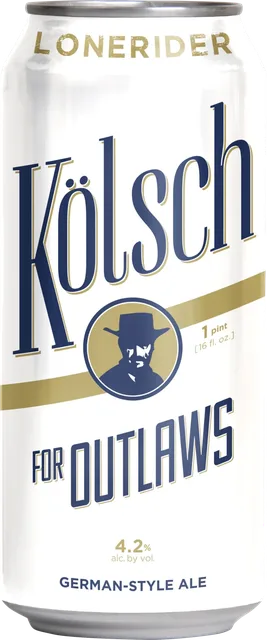
Kolsch for Outlaws is a German-style ale in the kölsch tradition, at 4.2% ABV.
FAQ
Is Kölsch an ale or a lager?
Technically an ale, because it uses top-fermenting ale yeast. It is then cold-conditioned like a lager, which is why it tastes crisp and clean and is often called a hybrid style.
Why can only Cologne breweries make Kölsch?
The 1986 Kölsch Konvention restricted the name to breweries in and around Cologne, and the EU granted Kölsch protected geographical indication status in 1997. Outside the EU, brewers usually label their versions Kölsch-style.
What glass is Kölsch served in?
A Stange, a tall, narrow, straight glass that holds 200 ml. The small size keeps each pour cold and fresh.
What does Kölsch taste like?
Light, soft and crisp, with grainy malt, a gentle herbal hop note and a faint fruitiness from the yeast. It finishes dry.
How do you pronounce Kölsch?
Roughly "kuhlsh," with the ö sounding like the vowel in "burn" said with rounded lips. Saying "kohlsh" will get you understood.