Beer Glassware Guide: Which Glass for Which Beer
Which Glass for Which Beer
The right beer glass is the one whose shape suits the beer's main strength: a tall, narrow glass for crisp, bubbly beers, a curved bowl that narrows at the top for aromatic ones, and a sturdy pint for everyday drinking. Shape matters because most of what you call flavor is really aroma, and the glass decides how much of that aroma reaches your nose.
Quick facts
- Best all-rounder for aroma: a tulip or teku.
- Best everyday glass: a nonic or shaker pint.
- Wheat beers: the tall, curved weizen glass.
- Kolsch and delicate lagers: the thin, straight stange.
- Strong, barrel-aged beers: a snifter.
- Any glass works better than drinking from the can or bottle, because you can actually smell the beer.
Why glass shape matters
Three things happen in a glass: aroma collects, foam forms, and the beer warms toward room temperature.
- Aroma. A wide bowl gives the beer surface area to release aroma, and a narrower rim above it gathers that aroma and points it at your nose. Researchers in Japan reported in 2015 that glass geometry changes how evaporating ethanol spreads around the rim, which in turn affects how aroma reads. That is why the bowl-and-taper shape shows up again and again.
- Foam. The head is not decoration. It holds aroma compounds and protects the beer underneath. Glasses that curve inward support a stable head; straight walls let it fade sooner.
- Temperature. A stem keeps your warm palm off the bowl, so the beer holds its serving temperature longer. A thick pint glass, cupped in the hand, warms faster.
Clean glass matters as much as shape. Grease or soap residue kills foam and leaves bubbles clinging to the sides. A properly clean glass, rinsed with cold water before pouring, gives a better head and better aroma than an expensive glass that is a little dirty.
The shaker pint
The straight-sided, slightly flared American pint gets its name from bar use, where it doubles as half of a cocktail shaker. It is cheap, stackable and tough, which explains why it is everywhere. For flavor it is fairly neutral: the wide mouth lets aroma drift away. Fine for a lager or pale ale with a burger, less ideal for a beer you want to study.
The nonic
The nonic is the British pint with a bulge a couple of inches below the rim. The bulge gives grip, keeps glasses from sticking when stacked, and protects the rim from chips (the name is usually explained as "no nick"). It suits English ales, porters, stouts and lagers. Like the shaker, it is a drinking glass rather than a tasting glass, and it is a good one.
The tulip
A tulip has a rounded bowl, a pinched waist and a slightly flared lip, usually on a short stem. The bowl lets you swirl, the waist traps aroma, and the lip supports a thick head. It is the most versatile glass for flavorful beer: IPAs, hazy IPAs, Belgian ales such as a tripel or dubbel, and stronger stouts all do well in it.
The weizen glass
The tall, thin-walled vase with a curved top is the traditional Bavarian glass for wheat beer. Its height and generous volume make room for the big, fluffy head these beers throw, and the shape shows off their hazy gold color. Pour slowly at an angle, then swirl the last bit in the bottle to pick up the yeast. Skip the lemon wedge if you care about foam; citrus oils knock the head down. More on the style in our hefeweizen guide.
The stange
Stange means "pole" in German, and the glass is exactly that: a tall, narrow, straight cylinder, often holding only about 200 ml. It is the traditional glass for kolsch. The thin walls and small size keep a light, delicate beer cold and lively, because you finish it before it warms or goes flat. In Cologne, servers carry them in a round tray called a kranz.
The snifter
The snifter is a wide-bowled, short-stemmed glass with a sharply narrowing rim, borrowed from brandy. It is built for slow sipping of strong, complex beers: imperial stouts, barleywines and barrel-aged beer. Pour a small amount, swirl, and let the aromas build in the bowl.
The teku
The teku is a newer glass with a long stem, an angular bowl and a slight outward flare at the rim. It was designed by Italian brewer Teo Musso of Baladin and beer writer Lorenzo Dabove, known as Kuaska, after they tasted beers from many different glasses. It behaves like a sharper-edged tulip and has become a favorite glass for tasting and judging because it works with almost any style.
If you only own two glasses
Get a nonic or shaker pint for everyday drinking and a tulip or teku for anything you want to really taste. A white wine glass is a perfectly good stand-in for the tulip. Between them you can serve every beer in this guide well, and you can learn more about what to look for in how to taste beer.
From the Lonerider lineup
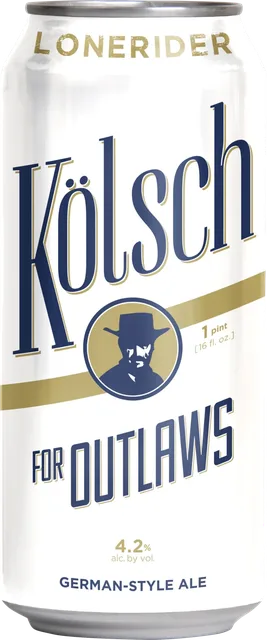
Two beers in the lineup have classic glasses: Shotgun Betty, a German-style hefeweizen with a banana and clove nose, belongs in a weizen glass, and Kolsch for Outlaws fits the slim stange.
FAQ
Does the type of beer glass really make a difference?
Yes, mostly through aroma and foam. A glass that narrows toward the rim concentrates aroma and helps the head last, so the same beer smells and tastes fuller than it does from a straight-sided pint or straight from the can.
What glass should I use for IPA?
A tulip, teku or dedicated IPA glass. The rounded bowl and narrower rim gather hop aroma. A nonic or shaker pint works for casual drinking, but you lose some of the aroma.
Why are beer glasses for hefeweizen so tall?
Wheat beers produce a large, fluffy head and are traditionally served in half-liter portions. The tall weizen glass has room for both, and its curve helps the foam stay put while showing off the beer's hazy color.
What is a teku glass?
A stemmed, angular tasting glass designed in Italy by brewer Teo Musso and beer writer Lorenzo Dabove. Its bowl and flared rim concentrate aroma, so it works for nearly every style and is popular with judges and serious tasters.
Should beer glasses be frozen?
No. Frozen glasses drop the beer below its ideal temperature, can create ice shards, and may carry freezer odors. A clean glass rinsed with cold water is the better choice.