Hazy IPA: What Makes a Juicy or New England IPA
What Makes a Juicy or New England IPA
A hazy IPA is an IPA brewed for aroma and texture instead of bitterness: cloudy, soft and full-bodied, with intense tropical and citrus fruit aromas and a gentle bitter finish. You will also see it called juicy IPA, New England IPA or NEIPA. They all mean the same style.
The "juicy" part is not fruit juice. Like most of the flavor in an IPA, it comes from hops, used in large amounts late in the brewing process.
Quick facts
- Family: ale
- Also called: juicy IPA, New England IPA, NEIPA
- ABV: 6 to 9% (BJCP 2021); 6.3 to 7.5% (Brewers Association 2026)
- Bitterness: 25 to 60 IBU (BJCP); 20 to 50 IBU (BA), though perceived bitterness is often much lower than the number
- Color: 3 to 7 SRM, straw to gold, opaque
- Key flavors: mango, passion fruit, citrus, stone fruit, with a soft, creamy body
- Recognized: BA added Juicy or Hazy IPA to its guidelines in 2018; BJCP lists Hazy IPA as a style in its 2021 guidelines
What a hazy IPA tastes like
Lead with aroma. A good hazy IPA smells like a fruit bowl: ripe mango, orange, passion fruit, pineapple, peach. The flavor follows the nose. Bitterness is restrained, and the finish is soft rather than sharp.
The body is the other giveaway. Hazy IPAs feel fuller and smoother than West Coast IPAs, sometimes described as pillowy. That comes from oats and wheat in the grain bill and from water that leans toward chloride, which tends to soften a beer's texture.
The Brewers Association guideline makes a point worth repeating: perceived bitterness can be very different from the measured IBU. A hazy IPA might test at 40 IBU and taste like 20. If you want to know why, our ABV and IBU explained page covers what IBU does and does not capture.
Why hazy IPA is cloudy
It is not because the brewer skipped filtering, and it is not mostly yeast. According to the BJCP, the haze comes from polyphenols released by heavy dry hopping binding with proteins from starchy grains like oats and wheat. Those particles are tiny and stay suspended, which is why a hazy IPA looks opaque even after it has settled.
The BJCP is also clear about the limit: an IPA should always be drinkable. Beers so thick they resemble a milkshake or smoothie are outside the style.
How hazy IPAs are made
Hazy IPA uses the same basic ingredients as any IPA, rearranged.
- Grist: pale malt with a good share of flaked oats or wheat, and very little caramel malt.
- Hops: fruity American and New World varieties, added mostly late in the boil, in the whirlpool, and as heavy dry hopping. Fewer early additions means less bitterness.
- Dry hopping during fermentation: some hops go in while the yeast is still active. The BJCP notes this can transform hop oils into new fruity compounds, a process brewers call biotransformation.
- Yeast: neutral to moderately fruity strains, which add to the stone fruit character.
For the bigger picture of how hops do their work, see hops explained.
Where hazy IPA came from
The style started in New England as a variant of the American IPA. The BJCP names The Alchemist's Heady Topper, a Vermont beer, as its original inspiration. The style spread through the 2010s and became so common that the Brewers Association added three new categories in its 2018 guidelines: Juicy or Hazy Pale Ale, Juicy or Hazy IPA and Juicy or Hazy Double IPA. The BJCP's 2021 guidelines list Hazy IPA as its own style. It is still evolving, with a trend toward even lower bitterness.
Hazy IPA vs West Coast IPA
| Hazy IPA | West Coast IPA | |
|---|---|---|
| Appearance | cloudy, opaque | clear, bright |
| Bitterness | low perceived | firm to sharp |
| Body | soft, full | lean, dry |
| Aroma | tropical, juicy citrus | pine, resin, grapefruit |
| Grain | oats and wheat | mostly pale malt |
For the clear side of the family, see American IPA.
Freshness and storage
Hazy IPAs are the most perishable beers on the shelf. The heavy hop load that makes them smell great also oxidizes quickly, and an old or warm-stored hazy IPA can darken and taste muddy or sweet. Drink them fresh, keep them refrigerated from purchase to pour, and check the packaging date. See how to store beer.
How to serve and pair it
Serve around 45 to 50°F in a tulip or a wide-mouthed glass that shows off the aroma. Pour gently and do not chill it to ice-cold, which mutes the fruit. Hazy IPAs pair well with spicy food, Thai and Indian dishes, fish tacos, fried chicken and fresh cheeses. Low bitterness means they will not amplify chili heat as much as a West Coast IPA.
From the Lonerider lineup
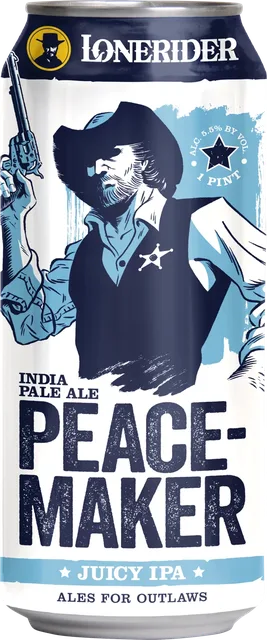
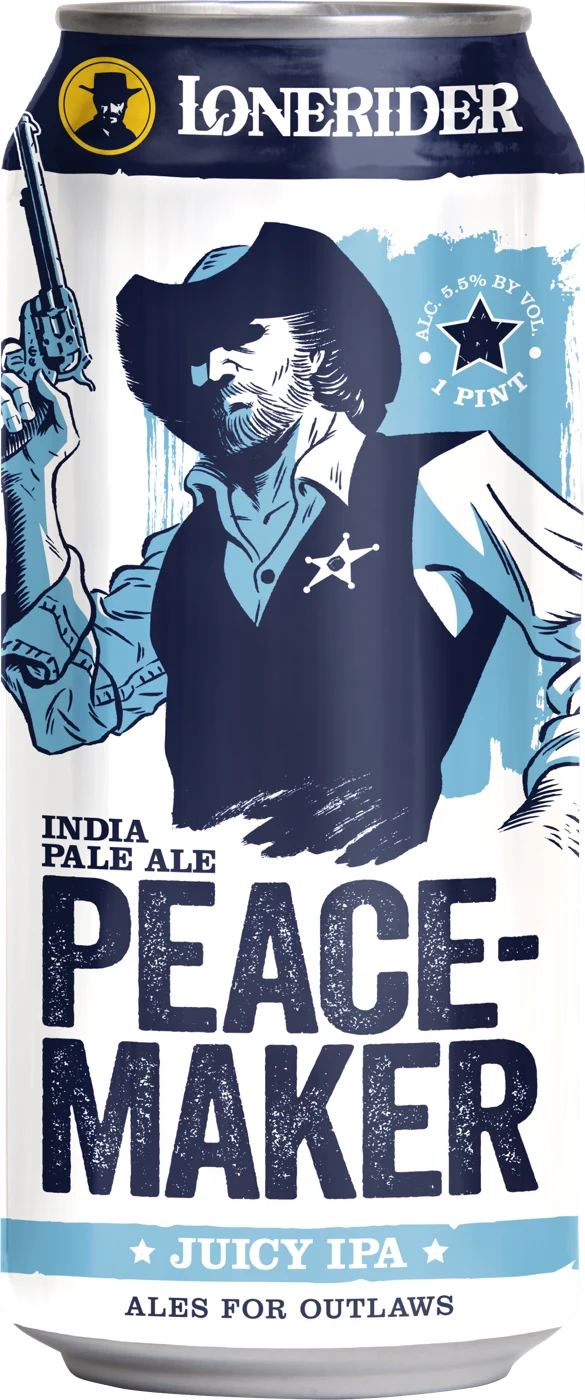
Peacemaker is a juicy IPA at 5.5% ABV, with big citrus aroma and low bitterness.
FAQ
What is the difference between a hazy IPA and a regular IPA?
A hazy IPA is cloudy, softer and juicier, with low perceived bitterness and tropical fruit aroma. A classic American or West Coast IPA is clear, drier and more bitter, with pine and citrus hop character.
Why is hazy IPA cloudy?
Polyphenols from heavy dry hopping bind with proteins from oats and wheat, forming fine particles that stay suspended. It is not mainly yeast, and it is not a flaw.
Is a juicy IPA made with fruit juice?
No. The juicy flavor comes from hops chosen for fruity aromas, added late and in large quantities. Some breweries make fruited versions, but the core style has no fruit.
Is New England IPA the same as hazy IPA?
Yes. New England IPA, NEIPA, juicy IPA and hazy IPA all describe the same style. The New England name comes from where it started.
How long does a hazy IPA last?
Not long. Its hop aroma fades and oxidizes faster than most beers, so drink it within a few weeks of packaging if you can and keep it cold the whole time.