American IPA: West Coast, Double IPA and the Style Explained
West Coast, Double IPA and the Style Explained
An American IPA is a pale, strong-ish ale where hops are the main event: noticeable bitterness, and big aromas of citrus, pine, resin or tropical fruit from American hop varieties. Malt is there to hold it up, not to compete.
IPA stands for India pale ale, a name borrowed from 19th century English beer. The American version, built on American hops, became the signature style of the US craft movement and is now brewed nearly everywhere.
Quick facts
- Family: ale
- ABV: 5.5 to 7.5% (BJCP 2021); 6.3 to 7.5% (Brewers Association 2026)
- Bitterness: 40 to 70 IBU (BJCP); 50 to 70 IBU (BA)
- Color: 6 to 14 SRM (BJCP); 4 to 12 SRM (BA), gold to light amber
- Key flavors: citrus, pine, resin, stone fruit or tropical fruit hops over a clean, lightly bready malt base
- Main variants: West Coast IPA, hazy IPA, double IPA
What an American IPA tastes like
Start with the aroma, which should be strong and obviously hoppy. Depending on the hops, that might be grapefruit, orange, pine needles, resin, mango or passion fruit. The malt is clean and moderate, sometimes with a little caramel or toast. Bitterness is medium-high to high and lingers into a fairly dry finish.
The beer should taste of hops, not of alcohol or sugar. A good one is bitter but not harsh, and it should leave you wanting another sip rather than a glass of water. To understand where those flavors come from, see hops explained and dry hopping.
Where IPA came from
The English story first, because a lot of it is myth. The BJCP's English IPA entry says pale stock ale from London was shipped to India starting in the late 1700s, that George Hodgson of the Bow Brewery dominated the trade early on, and that Burton brewers took over after Samuel Allsopp reformulated the beer in 1823 using Burton's mineral-rich water. The name "India Pale Ale" came into use around 1830. The BJCP also notes what is not true: IPA was not invented for the voyage, and it was not unusually strong or unusually hoppy for a beer meant to keep.
The American chapter starts later. The BJCP cites Anchor Liberty Ale, first brewed in 1975 with whole Cascade hops, as the first commonly cited modern American example, though older American IPAs like Ballantine's existed. From there, American craft brewers built a style around domestic hops and kept pushing it.
West Coast IPA vs other types of IPA
"IPA" on a can now covers a wide family. The main branches:
West Coast IPA. The BJCP describes very dry, sharply bitter, clear American IPAs as West Coast IPAs, a type within the American IPA style. The Brewers Association gives it its own listing at 6.3 to 7.5% ABV, 50 to 75 IBU and a paler 2 to 6 SRM. Expect brilliant clarity, a lean body and pine, citrus and resin hops.
Hazy or New England IPA. Soft, cloudy, low in perceived bitterness, with juicy tropical and citrus aroma. Different enough to have its own page: hazy IPA.
English IPA. Earthier English hops, more malt and biscuit, less aroma. BJCP range 5 to 7.5% ABV and 40 to 60 IBU.
Specialty IPAs. Black, brown, red, white, rye and Belgian IPAs. The BJCP groups these under Specialty IPA.
Session IPA. A lower-alcohol IPA with the hop aroma but less body and strength.
Double IPA, briefly
A double IPA (sometimes called imperial IPA) is a bigger, stronger American IPA. The BJCP puts it at 7.5 to 10% ABV and 60 to 100 IBU; the BA lists 7.6 to 10.6% ABV and 65 to 100 IBU. It emerged in the mid to late 1990s and caught on in the 2000s, helped along by Russian River's Pliny the Elder, first brewed in 2000. Despite the strength, a well-made double IPA should still finish fairly dry and stay focused on hops, not sweetness. As with any stronger beer, check the ABV on the label and pour accordingly. See ABV and IBU explained.
IPA vs pale ale
Pale ale is the smaller sibling. American pale ale is lower in alcohol and bitterness, with a little more malt balance. IPA turns everything up: more hops, more alcohol, more bitterness.
Freshness is the whole game
Hop aroma fades quickly. An IPA that is a few months old, or that has been stored warm, loses its citrus and fruit and can taste dull or sweet. Buy recent, check the packaging date, and keep it cold. More in how to store beer and cans vs bottles.
How to serve and pair it
Serve around 45 to 50°F in a tulip, a pint glass or an IPA glass. Bitterness and hop oils stand up to bold food: spicy dishes, burgers, fried chicken, tacos and sharp cheddar. Bitterness amplifies chili heat, so if you like your wings very hot, you have been warned. More in beer and food pairing.
From the Lonerider lineup
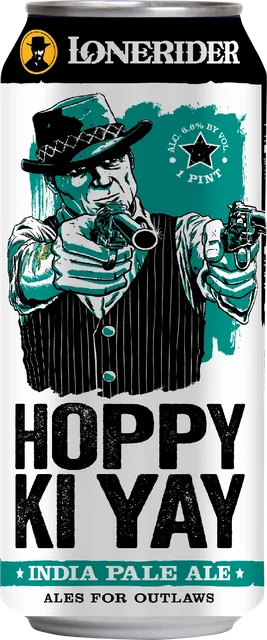
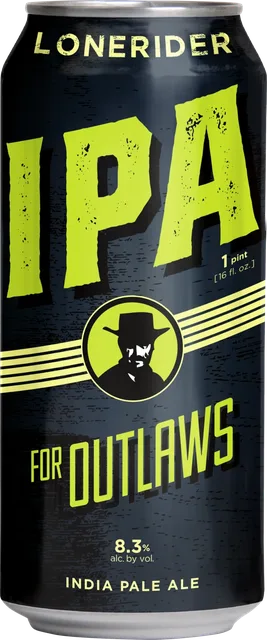
Hoppy Ki Yay is an American IPA at 6.6% ABV and 61 IBU with citrus and mango aroma. IPA for Outlaws is an IPA at 8.3% ABV with big citrus aroma.
FAQ
What makes an IPA an American IPA?
American hops. The style uses American (and increasingly New World) hop varieties that bring citrus, pine, resin and tropical fruit, on a clean, lightly malty base with firm bitterness. English IPAs use earthier English hops and more malt.
What is the difference between a West Coast IPA and a hazy IPA?
A West Coast IPA is clear, dry and sharply bitter with pine and citrus. A hazy IPA is cloudy, softer and juicier, with low perceived bitterness and tropical fruit aroma from heavy dry hopping.
What is a double IPA?
A stronger, hoppier American IPA, typically 7.5 to 10% ABV and 60 to 100 IBU according to the BJCP. It should still taste of hops more than alcohol or sweetness.
Why is IPA called India pale ale?
English pale ales were shipped to India starting in the late 1700s, and the name India pale ale was in use by around 1830. The idea that IPA was invented specifically to survive the voyage is a myth.
How long does IPA stay fresh?
Hop aroma starts fading within weeks, especially if the beer is stored warm. IPA is best fresh and cold, so check the packaging date and do not age it.