Cans vs Bottles: Which Keeps Beer Fresher?
Which Keeps Beer Fresher?
Cans block light completely and seal tightly, which makes them excellent at protecting beer from skunking and helps limit oxygen. Brown glass bottles also protect well, while green and clear glass do not, and research shows the "better" package can depend on the style of beer.
The old idea that canned beer tastes like metal is mostly outdated. Modern cans are lined so beer never touches the aluminum, and for many beers, how the package is stored matters more than which package it is.
Quick facts
- Light: cans block 100 percent; brown glass blocks most; green and clear glass offer little protection.
- Skunky flavor comes from light reacting with hop compounds and forms in minutes in strong sunlight.
- Can liners keep beer from touching aluminum.
- A 2023 study found package type mattered for an amber ale but much less for an IPA.
- US can recycling rate (2023): about 43 percent of cans shipped, according to the Aluminum Association and Can Manufacturers Institute.
Light: where cans win clearly
Light-struck, or "skunky," beer is a real chemical reaction. When light hits beer, riboflavin (vitamin B2, naturally present) acts as a photosensitizer and helps break down the bitter iso-alpha acids that hops contribute. The fragments combine with sulfur compounds to form 3-methyl-2-butene-1-thiol, a sulfur compound with an aroma much like skunk spray. People can smell it at just a few parts per billion, and a glass of beer in bright sunlight can turn noticeably skunky within minutes.
How much a container lets light through decides how much of that compound forms. Research published by the American Society of Brewing Chemists found that its formation is "greatly influenced" by how much light passes through the bottle.
- Cans: opaque. A sealed can cannot be light-struck.
- Brown glass: blocks most of the light that causes it. Good, not perfect.
- Green glass: much less protective.
- Clear glass: offers little protection.
For hoppy beer, opaque packaging is the simplest defense. If you are drinking from a can, the skunking clock starts only when you pour, so do not leave your glass in the sun.
Oxygen and freshness
Oxygen is the slow enemy of beer. It produces stale flavors, often described as cardboard or wet paper, and it dulls hop aroma. Both bottles and cans can be sealed with very low oxygen pickup when filled well; the quality of the filling line matters as much as the package.
Many brewers favor cans for hop-forward beers because they combine total light protection with a tight seal, and they are easy to keep cold.
The research is more nuanced than "cans always win." A 2023 study in ACS Food Science & Technology stored an amber ale and an IPA in brown glass bottles and aluminum cans, refrigerated for a month and then at room temperature for five more, testing every two weeks. For the amber ale, the chemical profile differed significantly by package at every point, and the bottles kept it fresher. For the IPA, the package made little difference, possibly because hop polyphenols helped protect it from oxidation. The researchers also saw some hop aroma compounds migrate from the beer into the packaging, a known effect of liners and cap seals.
The practical lesson: package matters less than storage. A can left warm for a month will taste worse than a bottle kept cold. See how to store beer.
Do cans make beer taste metallic?
Not in any meaningful way. Aluminum beer cans have a thin interior coating that keeps the beer from contacting the metal. If you taste metal, it is more likely from drinking straight from the can, where your lips touch the rim and your nose sits over the aluminum top instead of the beer. Pouring into a glass solves both and lets you smell the beer. See beer glassware and how to taste beer.
Portability and practical stuff
Cans are lighter, chill faster, stack more efficiently and do not shatter. That makes them easier to ship and better for places where glass is a hazard or not allowed. Bottles keep a traditional feel and remain common for strong, cellared or bottle-conditioned beers, such as many barrel-aged beers and Belgian-style ales.
Recycling
According to a 2023 survey by the Aluminum Association and the Can Manufacturers Institute, about 43 percent of aluminum beverage cans shipped in the US were recycled, below the 30-year average of roughly 52 percent. Even so, cans outperformed glass and PET plastic bottles on recycling rate, and US-made cans averaged about 71 percent recycled content. Aluminum is also unusually valuable as scrap, which helps fund recycling programs. Rinsing and recycling either container is the useful habit; local programs vary.
From the Lonerider lineup
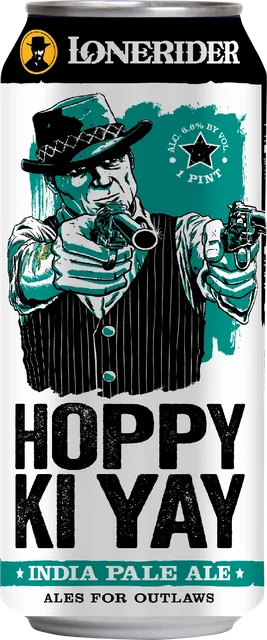
Everything in this lineup ships in 16 oz cans, a good fit for hop-forward beers like Hoppy Ki Yay, an American IPA at 6.6% ABV and 61 IBU with citrus and mango aroma that is best kept away from light and heat.
FAQ
Does beer taste better from a can or a bottle?
Neither is automatically better. Cans block all light, which prevents skunking, and brown bottles protect well too. Research suggests the difference depends on the beer, and storage temperature and age usually matter more than the container. Pour either into a glass for the best aroma.
Why does beer in green bottles taste skunky?
Green glass lets through light that reacts with hop compounds and riboflavin in beer, forming 3-methyl-2-butene-1-thiol, a sulfur compound related to skunk spray. Brown glass and cans block that reaction much better.
Do aluminum cans affect the taste of beer?
Not directly. Beer cans have an interior liner so the beer never touches the aluminum. Any metallic impression usually comes from drinking straight from the can rather than pouring into a glass.
Are cans or bottles better for the environment?
In the US, aluminum cans have a higher recycling rate than glass or PET plastic bottles and contain more recycled material on average, and they are lighter to ship. The best choice is whichever container you will actually recycle.