How to Store Beer: Temperature, Light and Freshness
Temperature, Light and Freshness
Store beer cold, dark and upright, and drink most of it while it is fresh. Refrigeration is the single biggest factor: heat speeds up the chemical reactions that make beer taste stale, and light can skunk it in minutes.
Beer is not wine. With a few exceptions, it does not improve with age, and the hoppy styles that dominate craft shelves are some of the most perishable of all.
Quick facts
- Ideal storage temperature: cold, around 38°F, which is standard refrigerator territory.
- The 3-30-300 rule: 3 days at 90°F does the same flavor damage as 30 days at 72°F or 300 days at 38°F.
- Light: keep beer in the dark; light causes skunky flavor.
- Position: upright, for both bottles and cans.
- Hoppy beers: best within roughly three months of packaging, and sooner is better.
- Exceptions: some strong, dark or barrel-aged beers can age well in cool, dark storage.
Temperature: keep it cold
Heat is the main driver of staling. Warm storage speeds up oxidation, which produces off flavors usually described as cardboard, wet paper, honey, sherry or a metallic edge. It also fades hop aroma and can dull carbonation. The Brewers Association's guidance for retailers is blunt: refrigerated storage is best for all beer, at all times.
The 3-30-300 rule, from a large brewery's study and cited by the Brewers Association, puts numbers on it. Three days in a 90°F car trunk causes about the same flavor loss as 30 days at room temperature (72°F) or 300 days in a 38°F refrigerator. In other words, a hot car on the way home can undo weeks of careful handling.
Practical habits:
- Put beer in the fridge as soon as you get home.
- Do not leave it in a hot car or on a sunny porch.
- Think in total time spent warm. By the 3-30-300 logic, a short warm stretch costs far less than weeks at room temperature.
- If you have no fridge space, pick the coolest, darkest, most stable spot you have, such as a basement or interior closet.
Storage temperature is not the same as serving temperature. Many beers taste best a bit warmer than the fridge; see beer serving temperature.
Light: keep it dark
Light reacts with riboflavin and hop-derived bitter compounds in beer to form 3-methyl-2-butene-1-thiol, the compound behind skunky aroma. People can detect it at a few parts per billion, and a glass sitting in bright sun can turn within minutes.
Cans block light entirely. Brown glass protects well. Green and clear glass do little. Even with good packaging, a dark fridge or a closed box beats a sunny shelf. More on this in cans vs bottles.
Upright, not on its side
Store beer upright. Lying a bottle down exposes more beer surface to the oxygen in the headspace, puts the beer in contact with the cap liner, and spreads any yeast sediment along the side of the bottle instead of letting it settle at the bottom. Beer bottles use crown caps, not corks, so the wine logic of keeping a cork moist does not apply. For bottle-conditioned beers with yeast in the bottle, standing them upright in the fridge for at least a day before pouring lets the sediment settle so you can pour clear.
Reading freshness dates
Breweries date beer in a few ways:
- Packaged on, canned on or bottled on: the date the beer was filled. You judge freshness yourself.
- Best by or enjoy by: the brewery's own estimate of how long the beer stays at its best.
- Codes: some breweries use Julian dates or internal lot codes, which can take some decoding. Several larger breweries have moved to plain month, day and year formats for readability.
A packaged-on date is the most informative for hoppy beer, because you can see exactly how old it is. A best-by date is only as good as the brewery's assumptions, and it cannot tell you whether the beer sat warm along the way. For more, see how to read a beer label.
Hoppy beer is the most perishable
Hop aroma is the first thing to go. The bright citrus, tropical fruit and pine of an IPA come from volatile oils that fade with time, heat and oxygen. As they fade, malt sweetness and stale notes take over, and the beer can turn flat, sweet or papery.
Breweries' own guidance reflects this. Stone Brewing has used 90-day codes for most of its IPAs and hop-forward beers, and Sierra Nevada has suggested about 100 days for its Harvest IPA series. A common rule of thumb for drink-fresh styles is to avoid packages more than three months old. For American IPA, hazy IPA and anything heavily dry hopped, fresher and colder is always better. Buy what you will drink in the next few weeks rather than stocking up.
Beers that can be aged
Some beers hold up or evolve with time, mainly strong, malty or dark styles such as barleywine, imperial stout, some Belgian strong ales and many barrel-aged beers. Sierra Nevada, for example, has suggested up to a year for its barleywine. If you want to cellar these, store them cool, dark and upright, keep the temperature stable, and taste periodically. Light lagers, wheat beers and IPAs are not candidates.
From the Lonerider lineup
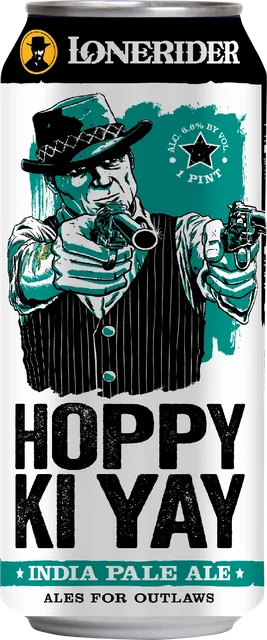
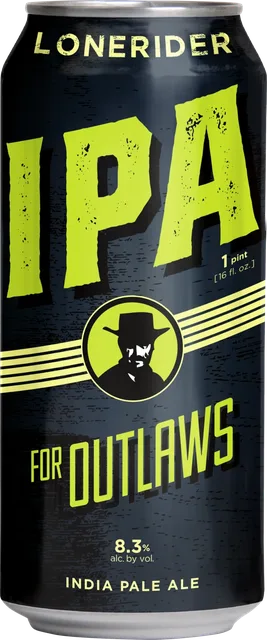
Hop-forward beers like Hoppy Ki Yay, an American IPA at 6.6% ABV and 61 IBU with citrus and mango aroma, and IPA for Outlaws, an 8.3% ABV IPA with big citrus aroma, are exactly the kind of beer to keep in the fridge and drink fresh.
FAQ
Can beer go from cold to warm and back to cold?
Yes. The cold-to-warm-to-cold cycle itself is not the main problem; what damages beer is time spent warm, because heat speeds up staling. Keep the warm stretches short.
Does beer go bad?
Packaged beer mostly goes stale rather than spoiling. Over time and with heat, it can taste like cardboard, wet paper or sherry, and hop aroma fades. Hoppy beers decline fastest.
How long does beer last in the fridge?
Most beer stays enjoyable for several months refrigerated, and hoppy beers are best within about three months of packaging. Check the packaged-on or best-by date on the can or bottle.
Should beer be stored upright or on its side?
Upright. It limits the beer's contact with oxygen in the headspace and the cap liner, and it keeps yeast sediment at the bottom of bottle-conditioned beers.
Does light really skunk beer?
Yes. Light triggers a reaction between riboflavin and hop bitter compounds that forms a skunk-like sulfur compound. Cans block light completely, and brown bottles block much of it.
Sources
- Temperature Tips for Retailers (Brewers Association)
- To Drink or Not to Drink: What Date Codes Say About Your Beer (BeerAdvocate)
- Bottled and Canned Beer Service and Pouring Standards (Cicerone Beer Server study guide)
- Sunstruck flavor formation in beer (Journal of the American Society of Brewing Chemists)