
Sherry Cask Finish: What Sherry Casks Do to Whiskey
What Sherry Casks Do to Whiskey
A sherry cask finish means a whiskey spent extra time, after its main aging, in an oak cask that previously held sherry. The sherry-soaked wood adds dried fruit, nuts, baking spice and a rounder, slightly sweeter texture, with the exact profile depending on which style of sherry the cask held.
Quick facts
- Sherry is: a fortified wine from the Jerez region of Andalusia, in southern Spain.
- Production zone: the "sherry triangle" of Jerez de la Frontera, Sanlúcar de Barrameda and El Puerto de Santa María, in Cádiz province.
- Main styles used for casks: oloroso and Pedro Ximenez, with fino and amontillado less common.
- Certification: the sherry Consejo Regulador registered a "Sherry Cask" certification mark in 2015 for casks seasoned with wine from its registered vineyards.
- Most seasoning casks today: American oak, seasoned for roughly a year or more.
Sherry basics
Sherry is a wine that gets fortified with grape spirit and then aged, usually in a solera, a stacked system of casks where younger wine is used to top up older wine over many years. It is not one flavor. The styles split by how they age.
- Fino and manzanilla: aged under flor, a layer of yeast that floats on the wine and shields it from air. The result is pale, bone dry and around 15% ABV, with almond and saline notes. Manzanilla is the version from Sanlúcar.
- Amontillado: starts life under flor, then the flor dies off and the wine ages with air contact. It ends up amber, dry, 17% to 20% ABV, with hazelnut and spice.
- Palo cortado: a rarer in-between style, dry and nutty, lighter than oloroso.
- Oloroso: aged with air contact from the start, no flor. Dark, dry, 18% to 20% ABV, with walnut, leather, tobacco and spice.
- Pedro Ximenez (PX): made from sun-dried Pedro Ximenez grapes. Intensely sweet, never below 250 grams of sugar per liter and often over 400, with raisin, fig, date, coffee and licorice.
- Cream and medium: blends of dry and sweet sherries.
The dry styles are made mainly from the Palomino grape. Dry does not mean thin: a good oloroso is one of the most savory things you can put in a glass.
Why whisky makers use sherry casks
It started as recycling. For centuries sherry was shipped to Britain, then the world's biggest sherry market, in wooden casks. Once empty, those casks were cheap and plentiful, and Scotch distillers filled them with new spirit. Drinkers came to expect the fruit and spice they gave.
That supply ended in 1986, when Spain stopped the export of sherry in casks. Distillers who still wanted the flavor had to start commissioning casks deliberately, and a whole trade grew up around seasoning new casks in Spain for the whisky industry. By the 1980s and 1990s, Scotch producers such as Balvenie and Glenmorangie were also using sherry butts specifically as a finish after aging in American oak. That is the template most sherry cask finished whiskey follows today, bourbon included.
Seasoned casks vs bodega casks
Not every sherry cask has the same history.
- Bodega (solera) casks spent years, sometimes decades, in a sherry solera. They are deeply saturated, scarce and expensive, and the few that leave Spain are prized.
- Seasoned casks are built for the whisky trade. A cooperage fills a new cask (most often American oak, sometimes European oak) with sherry made for the purpose, usually younger and simpler than what gets bottled. Under the Consejo Regulador's rules for certified sherry casks, the cask must hold DO sherry for at least a year; reporting from the trade puts the average closer to 18 months. One batch of seasoning wine can work through about five or six casks before it is spent, after which it is usually turned into vinegar or discarded.
Most "sherry cask" whiskey in the market today comes from seasoned casks. That is not a knock on it. Seasoning is consistent and controllable, and the certification mark exists to tell buyers that genuine DO sherry did the seasoning.
What a sherry finish adds to whiskey
On a bourbon base (vanilla, caramel, charred oak), a sherry finish usually shows up as:
- Dried fruit: raisin, apricot, fig, candied apple.
- Nuts: walnut and hazelnut, especially from oloroso.
- Spice: cinnamon, clove, a little pepper.
- Sweetness and body: more from PX, which can push toward toffee and molasses.
- Color: often a deeper amber or reddish tint.
Oloroso casks tend toward dry, nutty and savory. PX casks tend toward sticky and sweet. Fino casks are lighter and can add a faint saline, bready note. A high rye bourbon base adds its own spice, which plays well with the sherry's dried fruit; our guide to high rye bourbon explains why.
For labeling, a bourbon finished in sherry casks is not labeled plain "bourbon whisky." Federal rules require a statement such as "bourbon whisky finished in sherry barrels." See cask finished whiskey for the full explanation.
How to drink a sherry cask finish
Neat with a few drops of water is the best way to find the sherry layer. In cocktails, sherry finished bourbon makes a natural Manhattan, since the dried fruit lines up with the vermouth, and it works in citrus drinks such as a whiskey sour, where the fruit notes take the edge off the lemon. Keep pours measured. More ideas in bourbon cocktails.
From Lonerider Spirits
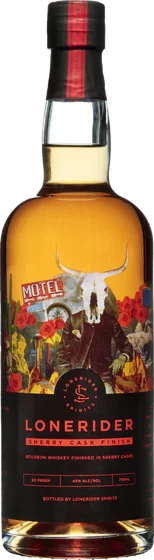
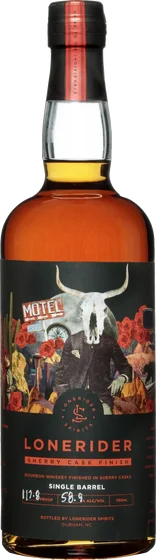
Our flagship and first release, Sherry Cask Finish, is a high rye bourbon whiskey finished in sherry casks, 90 proof (45% ABV). Expect cinnamon, clove, candied apples, apricot and toffee on the nose, vanilla custard, waffle cone, sherry and mild cacao on the palate, and leather, toasted oak and pepper on the finish. Single Barrel Sherry Cask is bottled one barrel at a time, so every barrel differs and the proof is handwritten on each label.
FAQ
What does sherry cask finish mean?
It means the whiskey finished its main aging in one barrel, then spent additional time in a cask that previously held sherry. The finish adds dried fruit, nut and spice notes from the sherry-seasoned oak.
What is the difference between oloroso and PX sherry casks?
Oloroso is a dry sherry aged with air contact, so its casks add nutty, savory, dried fruit notes. Pedro Ximenez is an intensely sweet sherry made from sun-dried grapes, so its casks add more sweetness, raisin and molasses.
Are sherry casks used for whiskey real sherry casks?
Most are seasoned casks: new oak filled with sherry for a year or more specifically to prepare it for whisky. Old solera casks exist but are rare. A Consejo Regulador certification mark identifies casks seasoned with genuine DO sherry.
Does sherry cask whiskey taste like sherry?
Not really. It tastes like whiskey with a sherry accent: dried fruit, nuts and spice on top of the base spirit. The sherry is a seasoning, not an ingredient you can pick out by itself.