
Beer Cask Finished Whiskey: Stout Casks, IPA Casks and the Barrel Round Trip
Stout Casks, IPA Casks and the Barrel Round Trip
Beer cask finished whiskey is whiskey that, after its main aging, spends extra time in a barrel that previously held beer, most often a stout and sometimes an IPA. Stout casks tend to add roast, coffee, cocoa and a malty sweetness; IPA casks add citrus peel and a faint hop bitterness.
Quick facts
- What it is: a secondary maturation (a cask finish) in a barrel that held beer.
- Most common beer: stout, including imperial stout. IPA and porter casks also appear.
- The usual barrel history: whiskey first, then beer, then whiskey again.
- Well known example: Jameson Caskmates, whose stout edition grew out of a 2013 barrel swap with the Franciscan Well brewery in Cork, Ireland. An IPA edition followed in 2017.
- US labeling: finished bourbon carries a statement such as "bourbon whiskey finished in stout casks," not plain "bourbon whiskey."
How a barrel goes from bourbon to beer and back
The round trip starts with a rule. Federal standards require bourbon to be stored in charred new oak barrels, so a barrel can only hold bourbon once. That produces a steady stream of used barrels, and brewers have been taking them for decades.
- Bourbon. A new charred oak barrel ages bourbon for years. When the bourbon is dumped, the staves are still damp with whiskey.
- Beer. A brewery fills the barrel with a strong beer, usually a stout. The beer draws out vanilla, caramel, coconut and leftover bourbon, which is why bourbon barrel aged stouts taste the way they do. Our guides to barrel-aged beer and beer and bourbon cask finishes cover this side of the trade.
- Whiskey again. The beer is emptied and the barrel goes back to a distillery, now carrying beer in its wood. Matured whiskey goes in for a finish and picks up some of what the stout left behind.
The beer side of this story has its own landmark. Goose Island in Chicago aged an imperial stout in used bourbon barrels under head brewer Greg Hall, the beer that became Bourbon County Stout. The brewery dates the first batch to 1992; beer historians have argued for a slightly later date, with the first public recognition coming at the Great American Beer Festival in 1995. Either way, it helped turn used bourbon barrels into a brewing staple.
Jameson's Caskmates shows the full loop in practice. The distillery sent used whiskey barrels to Franciscan Well, which aged a stout in them. The barrels went back, were refilled with Jameson, and the stout seasoned finish was released first as a limited trial in Ireland and then more widely in 2015. Later releases used IPA seasoned casks the same way.
Stout casks vs IPA casks
The beer matters as much as the barrel.
- Stout and imperial stout: dark roasted malt gives coffee, dark chocolate and cocoa notes, plus a bready, malty sweetness and sometimes a little dried fruit. Strong stouts leave more behind in the wood. If you are fuzzy on the styles, see porter vs stout.
- Porter: similar to stout but usually softer on the roast, so the finish leans toward toffee and chocolate rather than espresso.
- IPA: hops bring citrus, pine and a light, dry bitterness. An IPA cask finish tends to read as a crisp, slightly herbal lift at the end of the sip rather than a big change to the body.
Stout finishes generally make a whiskey feel richer and rounder. IPA finishes make it feel brighter. Neither adds much color compared with a sherry or port finish.
What it tastes like
On a bourbon base, a stout cask finish usually layers:
- Roast: coffee and toasted bread crust.
- Cocoa: dark chocolate or cacao nib, sometimes mocha.
- Malt: a cereal sweetness, close to brown bread or malted milk.
- Bitterness: a light, pleasant bitterness on the finish that keeps the sweetness in check.
Underneath, the vanilla, caramel and oak of the bourbon should still be there. The best examples taste like a bourbon with a stout accent, not a stout with a bourbon accent.
These whiskeys tend to suit people who already know what a standard bourbon tastes like, because the beer layer is easiest to spot when you have the baseline in your head. Try one neat with a few drops of water, then side by side with an unfinished bourbon. Our guide on how to taste whiskey has the method.
In the glass and in cocktails
Stout finished whiskey is a natural for stirred drinks. In an Old Fashioned, a dash of chocolate or coffee bitters underlines the cask. In a Manhattan, it pairs with a richer sweet vermouth. Keep the pour measured and the dilution generous enough to open the roast notes. IPA finished whiskey suits lighter treatment: a highball with soda water and a lemon twist shows off the citrus.
From Lonerider Spirits
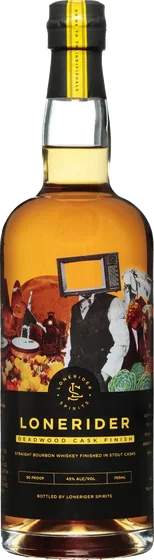
Our Deadwood Cask Finish is straight bourbon whiskey finished in stout casks, 90 proof (45% ABV), a collaboration with our sister brewing company. It is robust and best suited to seasoned bourbon drinkers; try it neat or in a stirred cocktail.
FAQ
What does stout cask finished mean?
It means the whiskey finished its main aging, then spent extra time in a barrel that previously held stout. The barrel often started out as a whiskey barrel, aged stout at a brewery and then returned to the distillery. The finish adds coffee, cocoa and roasted malt notes.
Can you age whiskey in beer barrels?
Yes, as a finish. In the US, bourbon's main aging must happen in charred new oak, but a matured bourbon can then be finished in a used beer barrel, as long as the label says so with a statement such as "finished in stout casks."
Is beer cask whiskey still bourbon?
Under TTB's current view, a bourbon finished in a used barrel becomes a distilled spirits specialty and is labeled with a statement like "bourbon whiskey finished in stout casks." The base spirit is bourbon; the finished product is not labeled as plain bourbon.
What is the difference between stout cask and IPA cask whiskey?
Stout casks add roast, coffee and chocolate and make the whiskey feel richer. IPA casks add citrus, pine and a light hop bitterness and make it feel brighter. The beer style that seasoned the barrel drives the difference.
Does beer cask whiskey contain beer?
The finishing barrel carries traces of beer in its wood, and some of that transfers into the whiskey as flavor. The finished product is still a distilled spirit at whiskey strength, not a blend of beer and whiskey.
Sources
- Jameson Caskmates Stout Edition (Difford's Guide)
- Jameson Caskmates Is a Stout Barrel Finished Whiskey Treat (The Whiskey Wash)
- Jameson Irish Whiskey Releases Caskmates IPA Edition (Brewbound)
- The Making of a Classic: Goose Island Bourbon County Stout (Beervana)
- Examples for ADI Conference, August 26, 2024 (TTB)