
How to Taste Whiskey: Glassware, Nose, Palate, Finish and a Splash of Water
Glassware, Nose, Palate, Finish and a Splash of Water
To taste whiskey well, pour a small measure into a tulip-shaped glass, nose it gently with your mouth slightly open, take a small first sip to adjust, then a second sip to actually taste, and pay attention to what lingers after you swallow. Then add a few drops of water and repeat, because dilution often changes what you can smell and taste.
Quick facts
- Best glass for tasting: a tulip or copita shape, such as the Glencairn, introduced in 2001.
- Pour size: about 0.5 to 1 oz (15 to 30 ml) is plenty for tasting.
- US standard drink: 1.5 oz of 40% ABV spirits contains about 14 grams of pure alcohol (NIAAA).
- Water: a few drops can open up aroma, especially in higher proof whiskey.
Choosing a glass: Glencairn vs rocks glass
The glass matters more for nosing than for drinking. A tulip shape, wide at the bowl and narrower at the rim, gathers aroma and directs it toward your nose. The Glencairn glass, introduced in 2001 by Glencairn Crystal in Scotland and modeled on the nosing copitas used by blenders, is the best known example. A small white wine glass or a sherry copita does nearly the same job.
A rocks glass (also called an old fashioned glass) is short, wide and heavy. It is excellent for whiskey over ice or for an Old Fashioned, but its wide mouth lets aroma escape quickly, and alcohol vapor tends to hit you all at once. If you only own rocks glasses, pour a smaller amount and tilt the glass so your nose meets the upper rim rather than the center.
Whatever you use, make sure it is free of soap residue.
Step 1: Look
Hold the glass against a white surface. Color hints at cask influence (new charred oak gives bourbon its amber to copper range; wine and sherry casks can add red or mahogany tones), but color is not proof of age or quality, so treat it as a clue rather than a verdict.
Step 2: Nose
This is where most of the information is. Bring the glass toward your face slowly and keep your mouth slightly open, which lets some alcohol vapor pass without overwhelming your nose.
Take short, gentle sniffs rather than one deep inhale. Common aroma families in bourbon:
- Sweet: caramel, vanilla, toffee, honey, brown sugar
- Fruit: baked apple, cherry, apricot, dried fruit, orange peel
- Spice: cinnamon, clove, black pepper, nutmeg (often from rye in the mash)
- Wood: toasted oak, char, cedar, leather, tobacco
- Grain: cornbread, cereal, bread dough
There are no wrong answers; name what a smell reminds you of.
Step 3: Palate
Take a small first sip and let it coat your mouth. The first sip of a strong spirit mostly calibrates your palate to the alcohol, so do not judge the whiskey on it. The second sip is the one to pay attention to.
Notice three things:
- Flavor: does the palate match the nose, or does something new appear?
- Texture: thin and bright, or oily and round? This is often called mouthfeel.
- Balance: is sweetness held in check by spice, oak or bitterness, or does one element dominate?
Step 4: Finish
After you swallow, breathe out gently through your nose and wait. The finish is what remains: maybe pepper and oak, maybe dried fruit or cocoa. Note how long it lasts and whether it changes.
Why add water to whiskey?
Adding a few drops of water often makes a whiskey more aromatic, not less, and there is some research suggesting why. In a 2017 study published in Scientific Reports, researchers B.C.G. Karlsson and R. Friedman used computer simulations to model how guaiacol, a smoky smelling compound found in some whiskies, behaves in mixtures of water and ethanol. They found that at ethanol concentrations up to about 45% by volume, guaiacol tended to sit at the surface of the liquid, where it can more easily reach your nose. At 59% and above, it was drawn into the bulk of the liquid, surrounded by ethanol.
Two caveats: the study was a molecular simulation, not a tasting panel, and it modeled one compound. Still, it fits what tasters have long reported.
How to do it:
- Use room temperature, still water. A dropper or straw gives you control.
- Add a few drops at a time, swirl, wait 30 seconds, and nose again.
- Stop when you like it. There is no correct ratio, and some whiskeys are best neat.
Ice is different: cold mutes aroma, so save it for casual drinking.
A simple tasting routine
- Pour half an ounce to an ounce into a tulip glass and let it rest a minute.
- Check the color.
- Nose gently, mouth open. Write down three words.
- Sip twice; note flavor, texture and balance.
- Note the finish.
- Add a few drops of water and repeat steps 3 to 5.
- Keep a glass of water nearby and sip it between whiskeys.
If you are comparing more than one whiskey, keep the pours small, taste from lowest to highest proof, and limit a session to a few samples. For more on what you are actually tasting, see what is bourbon and cask-finished whiskey.
From Lonerider Spirits
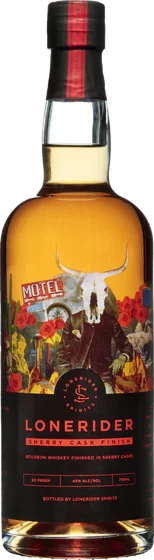
If you want a whiskey with plenty to find on the nose, Sherry Cask Finish is a high rye bourbon whiskey finished in sherry casks and bottled by Lonerider Spirits at 90 proof (45% ABV). Look for cinnamon, clove, candied apples and apricots and toffee on the nose, vanilla custard, waffle cone and sherry on the palate, and leather, toasted oak and pepper on the finish. Try it neat, then with a few drops of water.
FAQ
What glass should I use to taste whiskey?
A tulip-shaped glass such as a Glencairn or a sherry copita is best, because the narrowing rim concentrates aroma. A small wine glass works well too. A rocks glass is fine for casual drinking or ice but lets aroma escape faster.
Should you add water to whiskey?
A few drops often help, especially with higher proof whiskey. A 2017 simulation study found that a smoky aroma compound, guaiacol, sits closer to the surface of the liquid at lower ethanol concentrations, which may make it easier to smell. Add water a few drops at a time and stop when you like it.
How much whiskey should you pour for a tasting?
About half an ounce to an ounce (15 to 30 ml) per whiskey is enough to nose and taste properly. For reference, a US standard drink of 40% ABV spirits is 1.5 oz. Smaller pours let you compare several whiskeys and keep your palate sharp.
What is the finish of a whiskey?
The finish is the flavor and sensation that lingers after you swallow. Tasters note how long it lasts and how it changes, for example from sweet to dry or from fruit to oak.