
High Rye Bourbon and Mash Bills Explained: Traditional, High Rye and Wheated
Traditional, High Rye and Wheated
High rye bourbon is bourbon with a larger than usual share of rye in its recipe, commonly somewhere around 20 to 35% of the grain, which gives it more spice and a drier, sharper finish. There is no legal definition of "high rye," so the term is a description chosen by the producer, not a category with fixed rules.
To understand what that means in the glass, it helps to understand the mash bill: the list of grains, by percentage, that goes into a whiskey.
Quick facts
- Mash bill = the grain recipe of a whiskey, given as percentages.
- Bourbon's legal floor: at least 51% corn. Everything else is up to the distiller.
- Flavor grains: the non-corn share, usually rye or wheat plus malted barley.
- High rye: no legal definition. Often described as roughly 20 to 35% rye.
- Wheated bourbon: wheat replaces rye as the main flavor grain.
- Rye whiskey (not bourbon) needs at least 51% rye.
What is a mash bill?
Before anything is distilled, grain is cooked with water, cooled and fermented with yeast. That mixture is the mash, and the mash bill is its recipe. A bourbon label rarely prints the mash bill, though many producers publish it.
Federal rules set only one number for bourbon: the mash has to be at least 51% corn. Corn brings sweetness and body, and in practice most bourbons use well over the minimum, often somewhere in the 60 to 80% range. The remaining share is where distillers make choices. Malted barley is almost always included in a small amount (often around 5 to 15%), partly for flavor and partly because its enzymes help convert starch to fermentable sugar. The rest is the second grain, and that choice defines the style.
The three common bourbon mash bill styles
Traditional, or "rye recipe," bourbon
Most bourbon uses rye as the second grain in a modest amount, often somewhere in the 10 to 15% range, alongside corn and a little malted barley. The result is the profile most people think of as bourbon: caramel and vanilla from the barrel, sweetness from the corn, and a little spice in the background from the rye.
High rye bourbon
Raise the rye share and the spice moves to the front. Whisky Advocate, reviewing high rye bourbons, describes the style as typically carrying 20 to 35% rye, while noting there is no set rule. Some bottles go past that range; published mash bills in the high 30s exist. At that point the whiskey is still bourbon, as long as corn stays at 51% or more.
Wheated bourbon
Swap the rye for wheat and you get a wheated bourbon, or "wheater." Wheat shares in the mid teens to around 20% are common in published recipes. With little or no rye in the mash, the spice drops away and the whiskey reads softer and rounder, with caramel, vanilla and bread notes taking the lead. A distiller quoted by Whisky Advocate put it simply: think of the difference between wheat bread and rye bread.
How rye changes bourbon's flavor
Rye is the grain behind most of the spice people associate with American whiskey. In a high rye bourbon you can expect:
- Baking spice: cinnamon, clove, nutmeg, black pepper.
- A drier finish: less lingering sweetness than a wheated or traditional bourbon.
- Herbal and fruit notes: some drinkers find dill, mint or orchard fruit.
- More grip on the palate: often described as bite or heat, even at the same proof.
Corn still provides the sweet base, and the barrel still supplies vanilla, caramel and oak. Rye frames all of that with spice. That balance is why high rye bourbon is a favorite for stirred cocktails like the Manhattan, where the whiskey has to stand up to sweet vermouth and bitters.
High rye bourbon vs rye whiskey
The names cause confusion, but the line is simple:
- High rye bourbon is at least 51% corn, with a large rye share.
- Rye whiskey is at least 51% rye. Corn can be part of the recipe, but it cannot be the majority.
Both follow the same federal rules on distillation proof, charred new oak barrels and entry proof. A rye whiskey is usually spicier and less sweet than even the highest rye bourbon, because the dominant grain has changed.
Why "high rye" has no legal definition
The federal standards of identity in 27 CFR 5.143 set grain minimums for bourbon (corn), rye whiskey (rye) and a few other types. They say nothing about how much rye a bourbon must contain to be called "high rye." The phrase is a descriptive label claim, much like small batch. Two bottles both called high rye could differ by 15 percentage points of rye. If the producer publishes the mash bill, that is the number to look at.
How to taste the difference
The clearest way to learn mash bills is side by side. Pour a measured amount of a wheated bourbon and a high rye bourbon at similar proof, add a few drops of water to each, and taste them in turn. The wheater will usually feel rounder and sweeter in the middle; the high rye will show its spice on the finish. The guide on how to taste whiskey has a full method.
From Lonerider Spirits
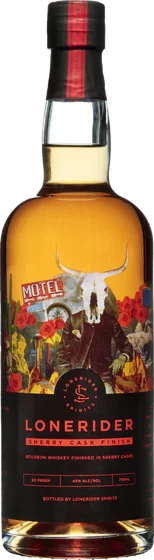
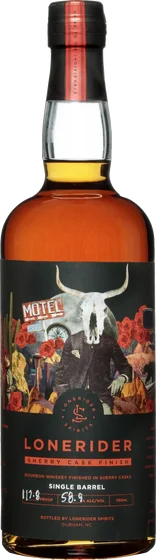
Sherry Cask Finish, the flagship and first release, is a high rye bourbon whiskey finished in sherry casks, 90 proof (45% ABV). The rye shows up as cinnamon, clove and pepper; the sherry casks add candied apple, apricot and toffee. It works well in a Manhattan or a citrus cocktail. Single Barrel Sherry Cask is bourbon whiskey finished in sherry casks and bottled one barrel at a time, so every barrel differs and the proof is handwritten on each label.
FAQ
What percentage of rye makes a bourbon high rye?
There is no legal threshold. In practice, bourbons described as high rye usually contain somewhere around 20 to 35% rye, and a few go higher. Check the producer's published mash bill if you want the exact number.
Is high rye bourbon the same as rye whiskey?
No. High rye bourbon is still at least 51% corn. Rye whiskey must be at least 51% rye, which usually makes it spicier and less sweet.
What does high rye bourbon taste like?
Expect more baking spice and pepper than a typical bourbon, a drier finish, and less overt sweetness. The barrel still provides vanilla, caramel and oak.
What is a wheated bourbon?
A wheated bourbon uses wheat instead of rye as its main secondary grain. It tends to taste softer and rounder, with more caramel and bread notes and less spice.
What is a typical bourbon mash bill?
Many bourbons use roughly 70% or more corn, a modest share of rye (often around 10 to 15%) and a small amount of malted barley. Exact recipes vary by producer and are not required on the label.