
Single Barrel vs Small Batch Bourbon: What the Label Terms Mean
What the Label Terms Mean
Single barrel bourbon is bottled from one barrel, unmixed with any other, so each release reflects that one cask. Small batch bourbon is a blend of a limited number of barrels, but "small batch" has no legal definition, so the number can be a handful or a few hundred.
Neither term is defined in the federal whiskey regulations as of 2026. Both are descriptive claims made by the producer, which is why it pays to know what they usually mean and what they cannot promise.
Quick facts
- Single barrel: whiskey from one barrel only. Common usage, not a federal definition.
- Small batch: a blend of a limited number of barrels. No legal definition, no set number.
- Batch sizes in the market range from a few barrels to several hundred.
- Single barrel bottles vary: proof and flavor can differ from barrel to barrel.
- Barrel proof: under long-standing federal guidance, bottled no more than 2 proof degrees below the proof measured when the barrel was gauged.
- Cask strength: generally used as a synonym for barrel proof.
What is single barrel bourbon?
In normal production, a distillery empties many barrels into a tank, blends them, adjusts the proof with water and bottles a consistent product. A single barrel release skips the blending. Each bottle comes from one specific barrel, and many producers print the barrel number, the warehouse location or the bottling date on the label.
The federal regulations do not define "single barrel," and as of 2026 there is no TTB standard for it. In practice, the industry uses the term to mean exactly what it says, and that convention is widely followed. If the label names a barrel number, you can usually trust it is one barrel.
Why every single barrel tastes different
Barrels are not identical, and neither are the places they sit. Even with the same new make spirit and the same entry proof, two barrels filled on the same day can come out noticeably different. The main reasons:
- Wood: oak varies in grain tightness and chemistry from tree to tree, and char levels vary slightly from barrel to barrel.
- Position in the warehouse: barrels high in a warehouse usually see more heat and bigger temperature swings than those near the floor. That speeds up extraction and changes how fast water and alcohol evaporate.
- Time: a single barrel is often pulled when the producer judges it ready, not on a fixed schedule.
Proof changes too. Depending on temperature and humidity, a barrel can lose water faster than alcohol (proof rises) or alcohol faster than water (proof falls). That is why single barrel whiskeys often carry unusual proofs, and why some producers state the proof barrel by barrel. Blending many barrels smooths all of this out. A single barrel keeps it.
What is small batch bourbon?
Small batch means a limited number of barrels were blended together. How limited is up to the producer. Published examples range from producers who blend a few dozen barrels at a time to brands that use up to about 300. Others treat two to five barrels as small batch.
Because there is no legal definition, "small batch" tells you less than it seems to. It says nothing about age, proof or grain. The useful questions are the ones the label may or may not answer: how many barrels, how old, what proof. Some producers publish the barrel count, which is a better guide than the phrase itself.
Single barrel vs small batch: which is better?
Neither, by rule. They answer different preferences.
- Choose single barrel if you like variation and want to taste one cask's character, quirks included. Two bottles of the same single barrel brand may not match.
- Choose small batch if you want a consistent profile from bottle to bottle, with some of the richness that comes from careful barrel selection.
Both depend far more on which barrels were picked than on the label term. A well-chosen small batch can beat a dull single barrel, and the reverse is just as true.
Barrel proof vs cask strength
Barrel proof means the whiskey goes into the bottle at, or very near, the strength it came out of the barrel, with little or no water added. Federal guidance on this dates back to ATF Ruling 79-9 (1979), which TTB still publishes. Under that ruling:
- "Barrel proof" means the bottling proof is not more than 2 degrees lower than the proof measured when the spirits were gauged for tax purposes.
- "Original proof," "original barrel proof" and "entry proof" mean the bottled proof matches the proof at which the spirit went into the barrel. That is a much narrower claim.
Cask strength is the term more common in Scotland and elsewhere, and it is generally used to mean the same thing as barrel proof. The 1979 ruling does not address the phrase.
Barrel proof bourbon is often well above 100 proof, and the number on the label is a fact, not a target. Most people find these whiskeys easier to taste with a splash of water, added a few drops at a time, which opens up aroma and tames the alcohol. A measured pour goes a long way. See how to taste whiskey for a simple method.
Does single barrel mean barrel proof?
No. Many single barrel bourbons are cut with water to a standard bottling proof. Others are bottled at barrel proof. If the label does not say barrel proof or cask strength, assume water was added.
From Lonerider Spirits
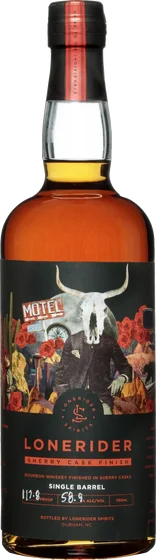
Single Barrel Sherry Cask is bourbon whiskey finished in sherry casks and bottled one barrel at a time. Because every barrel differs, the proof is handwritten on each label, which makes it a good bottle for seeing barrel variation firsthand. Try it neat, then with a few drops of water.
FAQ
What does single barrel mean on a bourbon label?
It means the whiskey in the bottle came from one barrel and was not blended with others. The term is not defined in federal regulations, but the industry uses it consistently.
How many barrels are in a small batch bourbon?
There is no legal number. Producers use the term for blends ranging from a few barrels to a few hundred, so check whether the label or producer states a barrel count.
Is barrel proof the same as cask strength?
Generally, yes. Both describe whiskey bottled at or near the strength it had in the barrel. Federal guidance defines barrel proof as no more than 2 degrees below the gauged proof.
Why is the proof different on each bottle of single barrel bourbon?
Each barrel ages differently depending on its wood, its spot in the warehouse and how long it was aged. Water and alcohol evaporate at different rates, so each barrel ends at its own proof.
Is single barrel bourbon better than small batch?
Not inherently. Single barrel offers variety and individual character; small batch offers consistency. Barrel selection matters more than either term.