How to Pour Draft Beer: Technique, Gas Balance and Fixing Foamy or Flat Pours
Technique, Gas Balance and Fixing Foamy or Flat Pours
To pour draft beer, hold a clean glass at a 45 degree angle, grab the tap handle at its base, open it fully in one quick motion, then tilt the glass upright about halfway up to build a one inch head. That is the Brewers Association method, and it works because a fully open faucet lets beer flow smoothly instead of churning.
Technique is the easy part. A great pour also depends on the system behind the faucet: temperature, gas pressure and line resistance all have to agree. When they do not, no amount of wrist work will fix it.
Quick facts
- Glass angle: start at 45 degrees, tilt upright once beer is about halfway up.
- Faucet: open fully and quickly, close quickly. Never half open.
- Head: about a one inch collar of foam.
- Flow rate: a balanced system pours about 2 ounces per second, roughly 8 seconds per pint.
- Beer temperature: 34°F to 38°F from keg to glass.
- Direct draw gas: beverage grade CO2, typically 12 to 15 psig for ales and lagers.
- Long draw gas: usually a CO2 and nitrogen blend of 60% to 80% CO2.
Step by step pour
- Start with a beer clean glass. Grease or residue kills foam before you start. See beer clean glassware.
- Hold the glass at 45 degrees under the faucet. The nozzle should never touch the glass or dip into the beer.
- Grip the handle at its base and open the faucet all the way, quickly. A partly open faucet causes turbulence and excess foam.
- Tilt the glass upright once the beer is about halfway up, working the glass to build the head.
- Finish with about a one inch collar of foam. The head carries aroma and keeps the beer looking right.
- Close the faucet quickly to avoid overflow. Do not let beer run over the rim and down the drain.
A one inch head is not shorting the customer. It is part of the pour the brewer intended, and it carries aroma to the nose. Different glass shapes change the look; see beer glassware.
Gas pressure and balance
Every keg needs gas pressure for two jobs: keeping the right amount of CO2 dissolved in the beer, and pushing the beer to the faucet. The Brewers Association rule is simple: the pressure applied to the keg must equal the total resistance of the system.
Pressure follows temperature. Colder beer holds CO2 at lower pressure. In the Brewers Association's equilibrium table, beer at 38°F holds about 2.5 volumes of CO2 at 11 psi, while the same pressure at 42°F holds only about 2.3. Most US craft beers are carbonated to 2.5 to 2.7 volumes. Add about 1 psi for every 2,000 feet above sea level.
Resistance comes from the line. Tubing length, tubing diameter and changes in height all slow the beer down. Short direct draw systems often use about 4 to 5 feet of 3/16 inch inside diameter vinyl line to create enough resistance. Long draw systems add restriction (choker line) or use pumps to hit the target flow.
Do not use the regulator as a speed dial. Raising pressure to pour faster overcarbonates the beer and causes foam. Lowering it to tame foam leaves the beer flat over time. If flow is wrong, fix the resistance, not the gas.
CO2 vs blended gas
- Pure CO2 is usually enough for short direct draw systems at the right temperature, typically 12 to 15 psig.
- Blended gas (CO2 and nitrogen) lets long draw systems use higher pressure to push beer far without overcarbonating it, because nitrogen is inert and barely dissolves. The proper blend for most long systems is usually 60% to 80% CO2.
- Nitrogen rich gas (around 25% to 30% CO2) is only for nitro beers. Used on regular beer, it can leave the keg flat within a few days.
- Compressed air should never touch beer.
Troubleshooting foamy beer
- Beer is too warm. If beer warms in the line or the keg is above 38°F, CO2 breaks out of solution and foams at the tap. Check the cooler and the line chilling.
- Pressure is too high. Over time the beer overcarbonates and every pour gushes.
- Faucet opened partway. Open it fully.
- Pressure dropped. An empty or failing gas supply can cause foamy pours as gas breaks out.
- The keg was just moved. Let it settle; see keg storage and handling.
- Dirty lines. Beer soil and biofilm can throw carbonation off and cause off flavors; see draft line cleaning.
Troubleshooting flat beer
- Pressure is too low. Beer loses carbonation in the keg over time.
- Wrong gas. Nitrogen rich gas on a standard beer flattens it within days.
- Dirty glass. Grease, especially from food dishes, destroys foam. A beer with a head that collapses fast is usually a glassware problem.
Troubleshooting cloudy beer
- It is meant to be hazy. Hefeweizens, wits and many dry hopped IPAs are cloudy by design. Know your lineup.
- Chill haze. Proteins and tannins can clump when beer is cold. It is harmless and cosmetic.
- Infection. Haze that comes with sour, vinegar or buttery aromas points to bacteria in the system. Cloudy tubing and haze in a FOB sight glass are warning signs. Clean the lines and talk to your supplier.
From Lonerider
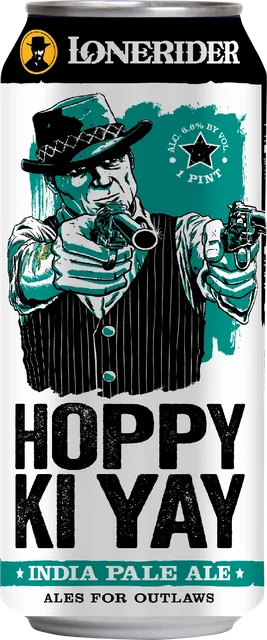
Pour Hoppy Ki Yay, our American IPA, with a full one inch head so the hop aroma comes up first, and talk to our trade team about draft.
FAQ
How much head should a draft beer have?
About one inch, per the Brewers Association's pouring method. The foam releases aroma and finishes the pour. Hold the glass at 45 degrees, then tilt it upright halfway up to build the head.
Why is my draft beer so foamy?
The usual causes are beer that is too warm (above 38°F), gas pressure set too high, a faucet that is only partly opened or dirty lines. Check temperature first, then pressure. Do not try to fix foam by turning the gas down, which will leave the beer flat over time.
What PSI should a kegerator or direct draw system be set to?
The Brewers Association lists 12 to 15 psig of CO2 for typical ales and lagers on direct draw systems. The exact number depends on beer temperature and the carbonation the brewer intended. Add about 1 psi for every 2,000 feet of elevation.
Should I use CO2 or beer gas for draft?
Pure CO2 works for most short direct draw systems. Long draw systems usually need a CO2 and nitrogen blend of 60% to 80% CO2. Nitrogen rich beer gas is only for nitro beers.
Why is my draft beer cloudy?
Some styles are hazy on purpose. Clear beers can show harmless chill haze when cold. Haze that comes with sour or buttery aromas usually means bacteria, so clean the lines.